The Snow Must Go On: A Farewell to the Open Forum Davos
There is a reason for the title. A farewell to the Open Forum Davos after 23 editions, the people who spoke there, and the part of Davos week you still have to plan.
Last updated: October 2026
There is a reason for the title.
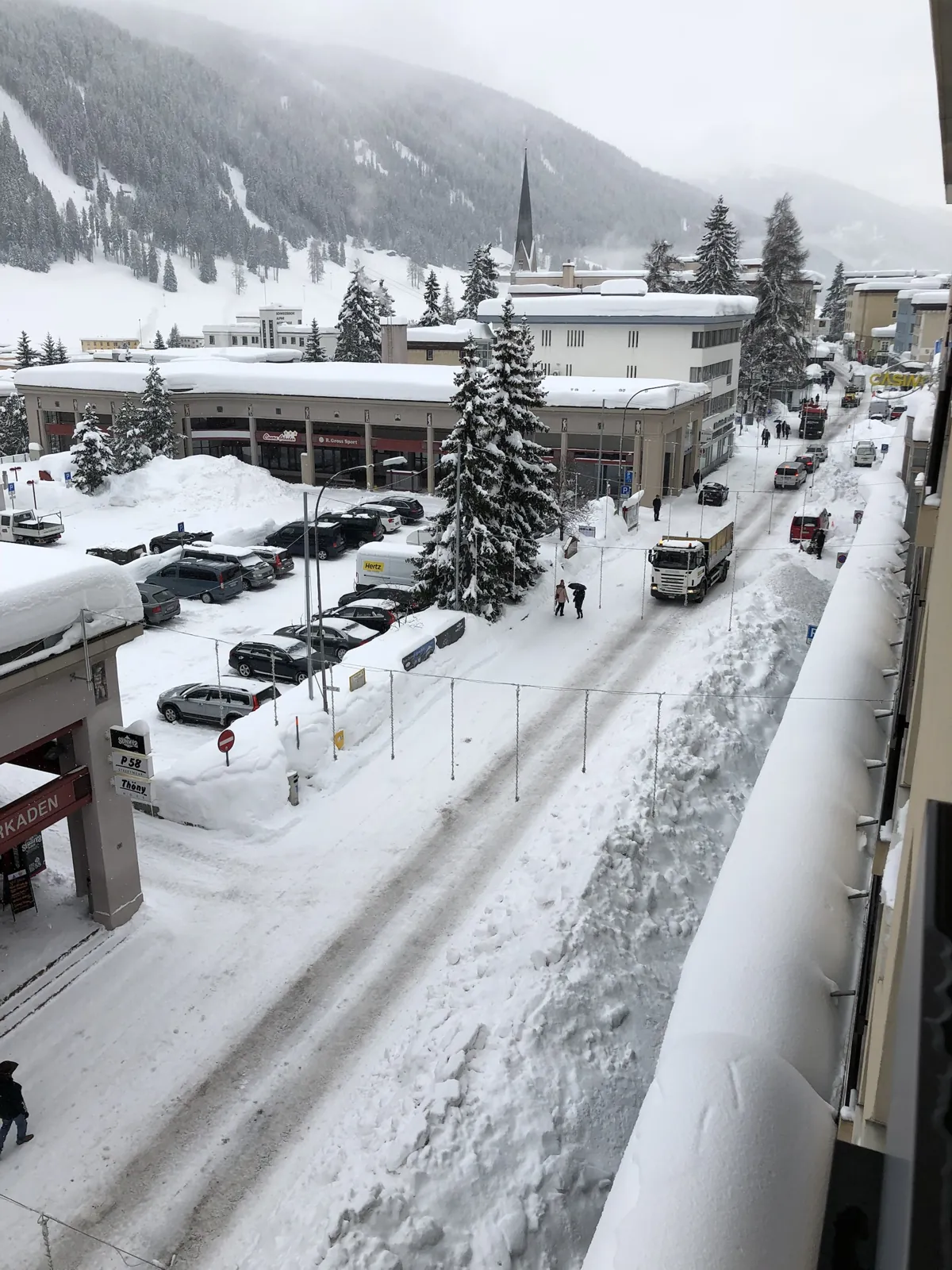
“The Snow Must Go On” was the name of one of the final Open Forum sessions in Davos, on the morning of Tuesday 20 January 2026. It was a very Davos kind of title: slightly poetic, slightly ridiculous, and about something serious.
The session asked what happens when glaciers, which cover about a tenth of the Earth and sustain half of humanity, keep shrinking. On stage were climate scientist Johan Rockström of the Potsdam Institute, Meena Wadhwa, director of the Scripps Institution of Oceanography, snow researcher Ruzica Dadic of the Swiss Institute for Snow and Avalanche Research, Zoe Balmforth, Belen Paez and Dana Shukirbayeva.
It turned out to be a fitting name for the end of an era. The Open Forum is not returning in 2027.
The end of an era
- After 23 editions and more than 230 public sessions, the World Economic Forum announced on 15 September 2026 that the Open Forum Davos would be discontinued.
- That is worth pausing over. For more than two decades, the Open Forum was the slightly unusual place in Davos where anyone could walk in and listen, without a WEF badge. It started in 2003, first run by the Swiss Protestant Church Federation with the Forum providing the speakers, and it met for most of its life in a school: the Swiss Alpine School on Guggerbachstrasse.
- In 2026 alone, its sessions went from antibiotics and quantum reality to space, food and the kind of 2050 we want. That is quite a programme for a school auditorium in the middle of a ski resort.
- Now the doors are closing. The snow, however, must go on.
Who spoke there
- Over the years the Open Forum stage held a President of the Swiss Confederation, the late Jane Goodall, Malala Yousafzai, Kailash Satyarthi, the Klitschko brothers, the ballerina Misty Copeland and will.i.am, alongside scientists, artists, activists, Indigenous leaders and students.
- Its last edition, under the theme Visions of 2050: Tomorrow Starts Now, brought two recent Nobel laureates: Victor Ambros, who shared the 2024 prize in medicine, and John Martinis, who shared the 2025 prize in physics. Singapore's Minister for Digital Development Josephine Teo, Amnesty International's Secretary-General Agnes Callamard and Sabrina Dhowre Elba of the UN's International Fund for Agricultural Development were on the programme too.
- For one week a year, a school hall in Davos had a speaker list most conferences would envy, and the public got in for the price of a registration.
| Day | Session |
|---|---|
| Monday 19 January | Which 2050 Do We Want? |
| Tuesday 20 January | The Snow Must Go On |
| Tuesday 20 January | Staying Grounded in an Age of Uncertainty |
| Tuesday 20 January | Where Biology Meets Choice |
| Wednesday 21 January | Swipe Left on Reality |
| Wednesday 21 January | Understanding Quantum Reality |
| Wednesday 21 January | The Fragile Future of Antibiotics |
| Thursday 22 January | Beyond Earth: The Next Space Race |
| Thursday 22 January | Agricultural Evolution |
| Thursday 22 January | An art session |
The final programme, Open Forum Davos 2026
What actually changes in 2027
- The 57th World Economic Forum Annual Meeting takes place in Davos from 18 to 22 January 2027. The Open Forum will not be part of it. The Forum gave two reasons: it shares responsibility with the Municipality of Davos for the meeting's footprint on the town, and livestreams and social media now carry the sessions to far more people than any hall could seat. Both are reasons a good guest gives.
- Davos week itself stays wide open, for anyone who knows where to look. If you have ever planned Davos for someone else, you already know the WEF programme is one part of the puzzle.
- There are the Houses. The hotel lounges. The dinners where someone says, “You should really meet…”. The panels you heard about from three different people. The invitation-only rooms. The public events. The breakfast that turns into lunch, the lunch that turns into a meeting, and the meeting that was supposed to take 20 minutes.
- And the WhatsApp message at 17:42 asking: “Can we get two people into this tonight?”
- That is Davos. And that is the part that still needs planning.
The Open Forum was easy. The rest of Davos takes planning.
- Part of what made the Open Forum special was its simplicity. You found the programme. You registered. You walked to the Swiss Alpine School. You went inside. No detective work required.
- The wider week is a different animal. In 2026, Davos Access mapped 497 side events across 42 venues. About one in ten was open to walk in, three in four needed registration, and the rest an application or an invitation.
- And the programme keeps moving. A House announces something. A dinner appears. A registration link opens. A speaker is added. A room disappears. Someone cancels. Another event suddenly becomes the room everyone wants to be in.
- Planning Davos means reading the room while the room is still being built.
So, if you are planning Davos for someone else
- Put the 47-tab spreadsheet down for a minute. Start with what the person is actually trying to achieve.
- Finding investors? Meeting potential clients? Getting visibility? Following one industry? A specialist conversation? Private meetings? Or simply making sure the week is not spent walking uphill between things that sounded interesting?
- Then build the week around that. A full calendar and a good Davos calendar are two different things, and sometimes the most useful thing between two meetings is nothing at all.
A little less panic, please
- If you are an executive assistant, a chief of staff, a family-office team or a concierge planning Davos, the order is surprisingly simple.
- 1. Get the bed first. The programme changes; Davos accommodation does not multiply.
- 2. Know the objective. A founder looking for investors needs a different week from a CEO meeting clients or a family office looking for new relationships.
- 3. Watch the Houses. Much of the interesting side-event programme develops there.
- 4. Register early. Some places disappear within days of a programme going live.
- 5. Leave some room. Davos has a habit of producing the most interesting meeting when your calendar is already full.
Where Davos Access comes in
- We are building the 2027 side-event programme in one place: a searchable directory where you can see what is happening, where, who it is for and how you get in, without scrolling until your eyes go numb. You can already explore the 2026 programme by industry, and 2027 programmes are added as hosts publish them.
- Davos Match: tell us what you are trying to achieve, and see the side events that fit.
- The Side Event Directory: search the week by industry, event, venue and access, in place of dozens of separate websites.
- Read the Room: knowing that an event exists is only the beginning. The useful question is often, “Is this a room I should be in?”
- The Davos 2027 planning timeline: what to sort now, what can wait, and when the important pieces of the week usually fall into place.
The Open Forum has ended. Davos week goes on.
- For 23 years the Open Forum gave Davos something special: a place where the wider public could come into the conversation. Its final chapter ended with a particularly good title.
- Some things will disappear and new ones will appear. The programme will change, the invitations will change, the rooms will change. The snow will, hopefully, still be there.
- And somewhere between the Congress Centre, the Promenade and a hotel lobby, somebody will have the conversation they came to Davos for. We will help you find the room.
If you want to know more
- Magic Mountain has more on how Davos week really works: Davos by the Numbers, for who comes and how many side events run around the programme; The Dinner Circuit, on eating well without an official invite; Barry's Piano Bar, the late-night institution; and The Davos Nightcap Hierarchy. The links are below.
- And before you go, read The Serendipity Shuttle. Some of the best conversations at Davos happen between two stops.
Frequently asked questions
Is the Open Forum happening at Davos 2027?
No. On 15 September 2026 the World Economic Forum announced that it is discontinuing the Open Forum Davos, after 23 editions and more than 230 public sessions since 2003.
Who spoke at the Open Forum Davos?
Over the years, a President of the Swiss Confederation, the late Jane Goodall, Malala Yousafzai, Kailash Satyarthi, the Klitschko brothers, Misty Copeland and will.i.am, among many others. The final 2026 edition included Nobel laureates Victor Ambros and John Martinis, Josephine Teo, Agnes Callamard, Sabrina Dhowre Elba and Johan Rockström.
What was “The Snow Must Go On”?
One of the final Open Forum sessions, on 20 January 2026, about shrinking glaciers and what they mean for water and mountain life, with Johan Rockström, Meena Wadhwa, Ruzica Dadic, Zoe Balmforth, Belen Paez and Dana Shukirbayeva.
Can I take part in Davos 2027 without a WEF badge?
Yes. Much of the official programme is livestreamed, and in town the side events are the way in. In 2026 about one in ten side events was open to walk in and three in four needed registration, so register as soon as programmes are published.
Related reading: The Side Event Directory, Davos Match, Read the Room, Davos 2027 planning timeline, Davos by the Numbers, The Dinner Circuit, Barry's Piano Bar, The Davos Nightcap Hierarchy, Davos 2027: the new building rules, The Serendipity Shuttle
Sources: World Economic Forum: An update on the Open Forum Davos, September 2026, World Economic Forum: What is the Davos Open Forum and what impact has it had?, World Economic Forum: Open Forum Davos 2026, Visions of 2050, World Economic Forum: Open Forum session, The Snow Must Go On, Davos Klosters: World Economic Forum Annual Meeting 2027
Got a specific question?
We've usually seen your exact situation before. Ask directly — no template reply.