Why Fireside Chats Outperform Every Panel at Davos
No podium, no stage lighting, no rehearsed soundbites — just real conversation. That's the whole case for the format, and it's a stronger one than most pavilions act like they believe.
What a panel gets you, and what a fireside chat gets you
A panel is built for distance. Stage at one end, audience at the other, a moderator keeping everyone roughly on schedule. Whoever's up there arrived with talking points they've used before, because a panel is exactly the kind of room where you'd be foolish not to. Nobody up there is thinking out loud — they're performing a version of the answer they already gave last year, to a room that's there to watch, not speak.
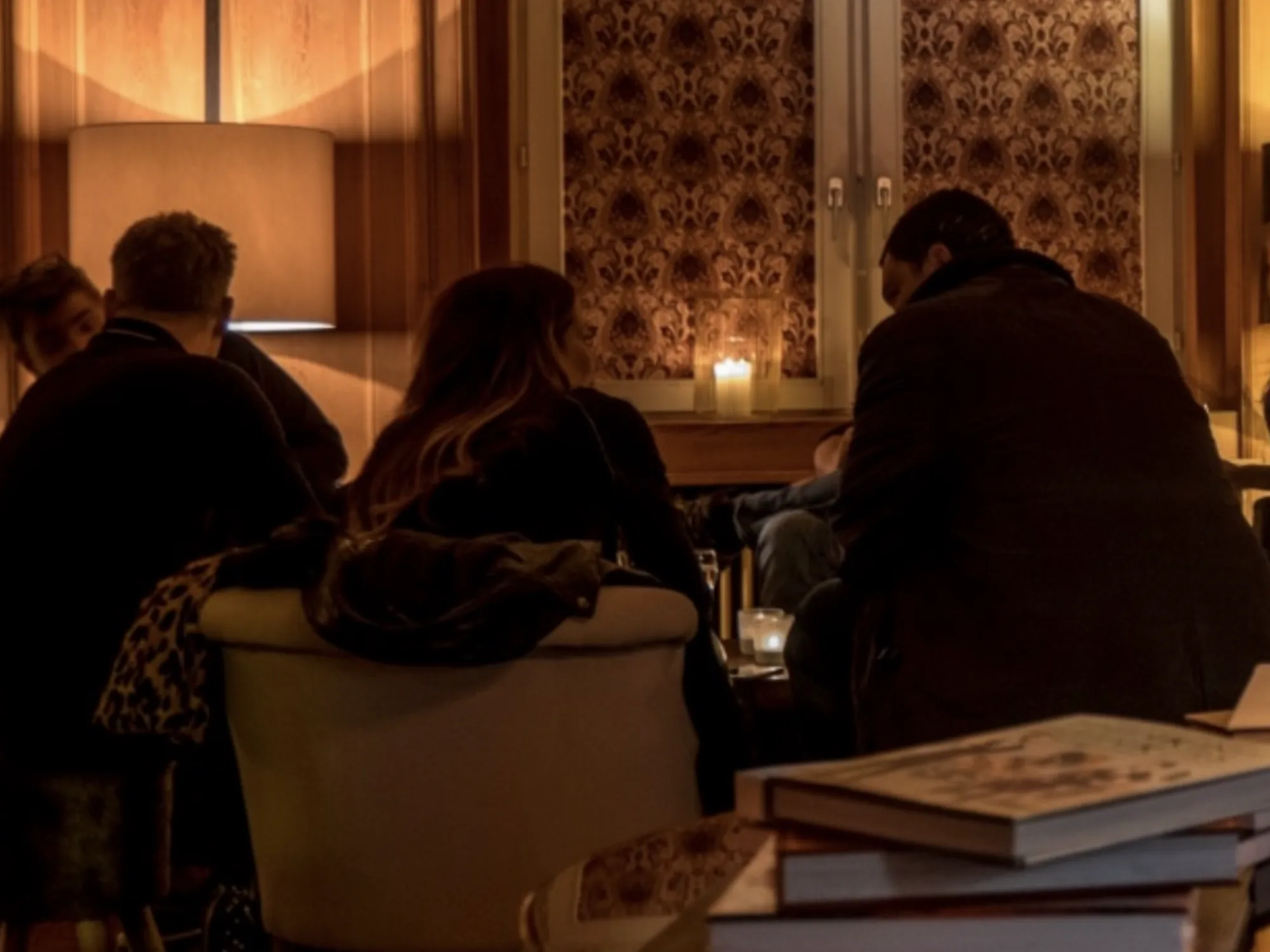
A fireside chat closes the distance on purpose. Small group, no stage, chairs close enough that you can hear someone change their mind mid-sentence. That's not a minor format detail — it's the whole reason the conversation goes somewhere real instead of somewhere rehearsed. People say different things when they're not being watched by three hundred strangers, and at Davos specifically, the things said in that smaller room are usually the ones that actually move something forward.
That's the case for the whole format: the fireside chat is where the real exchange happens, precisely because it isn't trying to be a performance.
What makes the room actually work
Start with warmth, literally. A real fire if the venue has one, or the equivalent — low light, a room that feels lived-in rather than rented for the evening. Swap the rows of chairs for seating people can actually sink into, because posture changes conversation more than most hosts give it credit for. Nobody opens up mid-sentence from a folding chair.
Food and wine are doing structural work here. A good glass in hand and something worth eating slows a room down in the right way — it's the difference between people checking their phones between sessions and people staying in their seats because leaving would mean putting the glass down.
Most hosts leave music as an afterthought, or skip it outright, and it's the cheapest fix on this whole list. Live piano in the background, or someone who's actually thought about the set instead of hitting shuffle on a generic playlist, keeps a room together in a way another agenda item never will. It does the job a moderator would otherwise have to do by force.
Where this actually happens in Davos
Which rooms in town actually support this — the ones with the fireplace, the wine cellar, the elevation away from the Promenade crowd — is its own subject, and we've already written it up properly. See where the real rooms are for the venue-level detail rather than us repeating it here.
What this looked like in practice
We've built a programme around exactly this idea before — an esports and investor evening, one example among the private work we've done, not something we run every year or pitch as a repeatable product. It worked for the same reason everything above works: the room did more than the agenda did.
We don't publish the details of that or any other project — client privacy, not modesty. If you want the track record, contact us directly and we'll walk you through it.
Planning your own pavilion or private session?
Talk to us. Same team, same directness as everywhere else on this site.
Frequently asked questions
What's the difference between a panel and a fireside chat at Davos?
A panel puts distance between the stage and the room — a podium, a moderator, rehearsed talking points aimed at an audience that's there to watch. A fireside chat closes that distance: small group, real exchange, nobody performing for a back row. The format decides which one you get.
How long do security checkpoints add to getting between venues at Davos?
There's no fixed number worth quoting — it changes by day, by checkpoint, and by how busy that hour is. Security checkpoints add real time on top of the walk itself, so budget for it rather than planning against a clean estimate.
What makes a Davos fireside chat actually work as a format?
The room, mostly. Warmth and low light over stage lighting, real seating over rows of chairs, food and wine treated as part of the evening rather than an afterthought, and music — a pianist or a genuinely curated set — doing more to hold people in the room than another agenda item would.